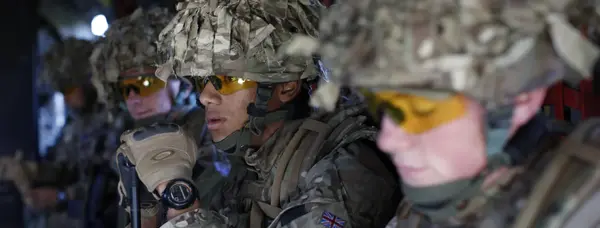
Is there any roles that an officer can do that involve mainly shooting?
I am most interested in shooting because I do a lot of target rifle shooting and I also would like to go through Sandhurst and become an officer. Is there any roles for officers where I would be shooting as my main job?
- 5 replies
- 21 views
- Author: Anonymous
- Category: Role, Role description
- Date asked:
- Last update:
-
RHRobert H. Marketing Officer
Hi Cecilia,
Unfortunately there is no job for an officer where you would be able to spend your time primarily shooting. That being said. If shooting is your passion and you can compete at a high level then shooting for the Army in competitions is very much a possibility. This would also require training, so while there aren’t any specific roles you can take advantage of the Army supporting its sportspeople and spend as much time competing in a representative sport as your chain of command would allow. There are opportunities for those who really excel to become full time sportspeople while in the Army. While not specifically shooting I have seen a number of people become GB Biathletes spending most of their time with the GB Squad And returning to the Army when that is over.
I hope this help. -
Anonymous
What is the actual role of an officer and what do they actually do on a day to day basis?
-
RHRobert H. Marketing Officer
Hi there
So this massively depends on which regiment or Corps you end up going to.
In general an Officer is responsible for leadership, command, planning, operations and, training, development and welfare of of their soldiers. Some regiments Officers have specialist roles such as in the Engineers, Medical fields, Intelligence and Logistics but for all roles you are an SME in your trade and are used as such in the planning process. There are two types of jobs an Officer undertakes; E1 - which is where you conduct tasks that are directly associated with the trade or regiment you are linked to and E2 - which are generalist staff roles in headquarters where you are utilised more as a planner or conducting day to day operations. you spend at least your first 3 years at E1 jobs, usually in a regimental construct. At this point, some stay to do more and some move off into E1 and E2 staff roles at Headquarters to broaden their understanding and utility in the army .
On a day to day basis, for a junior officer at E1 you would likely do PT, head into work and speak to your Troop/Platoon Sgt to discuss what needed to be achieved that day based on priorities set by the Chain of Command. You would then go about your own tasks while your Sgt ensures what you agreed together is completed. Day to day tasks can be such things as planning training to develop your soldiers, writing reports, managing career progression for your soldiers, undertaking Orderly Officer duties, conducting your own training and education, attending meetings, helping your soldiers complete tasks, Administrative tasks such as welfare checks on absent soldiers, conducting discipline etc.
Broadly your role is to ensure that your soldiers and equipment are trained and maintained ready to conduct any task required by your Chain of Command. Your Troop/Platoon Sgt is there as the voice of experience to guide you, and to ensure your orders are followed. You are a team and they help you to continue your education in how to be a better Officer. This will continue your entire career in that there will a Senior NCO that you work closely with who guides you and helps your orders come to fruition.
I hope this helps, please come back at me with more questions if i can help further. It can be quite complicated when you haven't lived it and we can take some knowledge for granted when we explain things just by force of habit. -
Anonymous
Thank you so much, would an officer train and deploy with the soldiers and go on the same exercises/do the same training as them?
-
RHRobert H. Marketing Officer
Hi,
So you would deploy on exercise with your soldiers especially as a Junior Officer. s you progress in seniority you might be in a HQ on the same exercise in a different location. As part of your Initial Trade Training you will do all the same training but they will go into more depth. So for example I am trained to drive a tank in an emergency but my driver receives more time practicing and honing their skills. Likewise, on their career courses they will get told about the planning and orders process but you will have been trained to a higher level as it is your day to day job. You train along side them day to day but there are courses that you won’t do as it is not your role. For example, and related to your earlier questions officers don’t train to become snipers as a sniper is not an officer role. You may train to lead a group of snipers or support weapons but you wouldn’t be in the ghillie suit and pulling the trigger.
Hope this helps
Have a question of your own?
How often do you see your friends and family from home?
Work life with us, Work life balance- 12 replies
- 50951 views
I like the idea of being in the Army but I don't want to kill people, is there a job where this is possible?
General- 7 replies
- 28062 views
What do deployments abroad include? Like what happens and whats the day to day life of soldiers like on deployment?
Role, Role description- 4 replies
- 6108 views