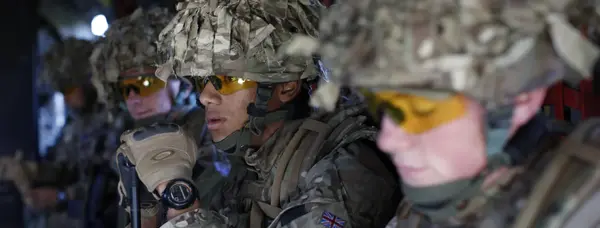
I want to ask about what it’s like to be an engineer in the army I would like to know if people do get enjoyment
I hate to say this but as a petite female I am scared to be an engineer or a mechanic because of being judged but I highly doubt that would be the case. I’ve just turned 21 and I am a very hands-on determinator person and I just wanna know if this is the right path for me.
- 1 replies
- 7 views
- Author: Anonymous
- Category: Role, Role challenges
- Date asked:
- Last update:
-
RNRobert N. Lead Recruiter Armed Forces Careers Office Sheffield
Hi,
I have bee in the Royal Engineers for nearly 16 Years. I joined as a Fabricator/Welder because I had prior knowledge in this trade as a civilian, although this is not a requirement because as long as you hold the necessary GCSE's to join in a particular trade, you will be trained at a Military Engineering School whilst being paid by The Army.
In the Royal Engineers we have two particular skill sets. The first, which every single Royal Engineer gets is Combat Engineer Training. Combat Engineer Training is a 10 week course and covers the following topics:
· Clearing obstacles: Removing enemy barricades, minefields, or debris to allow friendly forces to advance.
· Bridging: Constructing temporary bridges over rivers or gaps using Medium Girder Bridges (MGBs), Logistic Support Bridges (LSBs), or armoured vehicle-launched bridges.
· Route clearance: Using specialised vehicles and explosives to clear roads of IEDs (Improvised Explosive Devices) and mines.
· Breaching enemy defences: Using explosives or machinery to break through enemy fortifications.
· Water supply: Setting up clean water systems in remote and often hostile areas.
· Demolitions & Explosive Ordnance Disposal (EOD).
· Demolition operations: Using explosives to destroy enemy structures, bridges, or runways including Explosive Method Of Entry (EMOE).
· Booby traps and sabotage: Disrupting enemy operations by setting controlled explosive traps.
In addition to Combat Engineering you will be trained in your chosen trade. These range from all construction based trades e.g. Draughtsman, Plumber, Joiner, Bricklayer and Concreter, Surveyor, Electrician, Geographical Technician, Fabricator and Welder, Explosive Ordnance Disposal, Plant Operator, Logistics and Supply Specialist and Driver.
Hope this helps.
Regards,
SSgt Rob Needham
Have a question of your own?
How often do you see your friends and family from home?
Work life with us, Work life balance- 12 replies
- 50916 views
I like the idea of being in the Army but I don't want to kill people, is there a job where this is possible?
General- 7 replies
- 28008 views
What do deployments abroad include? Like what happens and whats the day to day life of soldiers like on deployment?
Role, Role description- 4 replies
- 6073 views