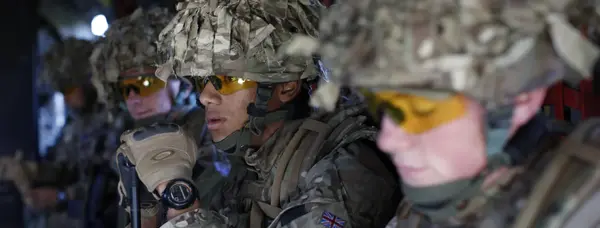
Do/Can army EM doctors ever get involved in combat and carry weapons?
- 4 replies
- 1201 views
- Author: Thomas Q.
- Category: Eligibility advice, Eligibility
- Date asked:
- Last update:
-
Anonymous
Hi Thomas
Thank you for the question.
As a doctor you will be attached to medical regiments and carry out live firing on the ranges and go on exercise and will have to carry a weapon. During operations it's the same, carrying the weapon and maybe using it to protect a casualty if and when needed.
I hope this answers the question.
Luke -
TCTori C. Regimental Medical Officer
Hi Thomas,
While Luke's answer is very relevant for RMOs (GPs) and GDMOs (Doctors between FY2 and specialty training), EM doctors are slightly different.
As he says, you will be trained on a weapon and all military personnel undergo a live firing assessment on a regular basis.
On deployments you will be deployed with a field hospital unit to a Role 2 or 3 facility. While you will deploy with a weapon, you won't necessarily have it on you at all times (might be difficult to do your job otherwise!) and you are less likely to be involved in any combat as Role 2 and 3 facilities are usually situated in a more secure location a bit further away. Saying that, you will be trained on how to manage if you do end up in a combat situation.
Are you a consultant or in training at the moment?
I would recommend speaking to a military EM doctor if this is a path you are interested in as it is quite a unique role. Hopefully this can be arranged by starting an application on the Army website and then speaking to the Army Medical Services recruiting team, however if that doesn't happen, please do send me a message and I will try and get some contact details for you. -
Anonymous
As a combat medic for special forces, are we allowed to participate in combat as well as be a medic on the field?
-
TCTori C. Regimental Medical Officer
Hello,
Medics fall under the same heading as doctors, we must follow the Geneva convention, this means we should only use a weapon in self defence or in the defence of a patient.
Have a question of your own?
How often do you see your friends and family from home?
Work life with us, Work life balance- 12 replies
- 50896 views
I like the idea of being in the Army but I don't want to kill people, is there a job where this is possible?
General- 7 replies
- 27981 views
What do deployments abroad include? Like what happens and whats the day to day life of soldiers like on deployment?
Role, Role description- 4 replies
- 6060 views